



Could the Best Beef Come from the Cows Nobody Wants?

We brought the five-year-old and ten-year-old ribeyes home to Arkansas for a taste test.
Friends,
Back in February I told you our beef tested at 1.88 to 1 on the omega-6 to omega-3 ratio, and that "grass-fed" on a shelf can mean almost anything. A bunch of you wrote back: keep proving it.
So in March I moved to Montana to help an 8,000-acre ranch pass to the next generation and take our beef to the next level. Not long after I got there, two open cows came up for the sale barn.
I told you then that in Spain's Basque Country, the most prized beef comes from cows like these, retired off grass at eight to eighteen years old, and that some of the best chefs in the world seek it out. I wondered if we could do that here.
Fair warning: I used to teach high school physics. I get more excited about a lab report than a grown man should. I'll keep it to the numbers that matter.
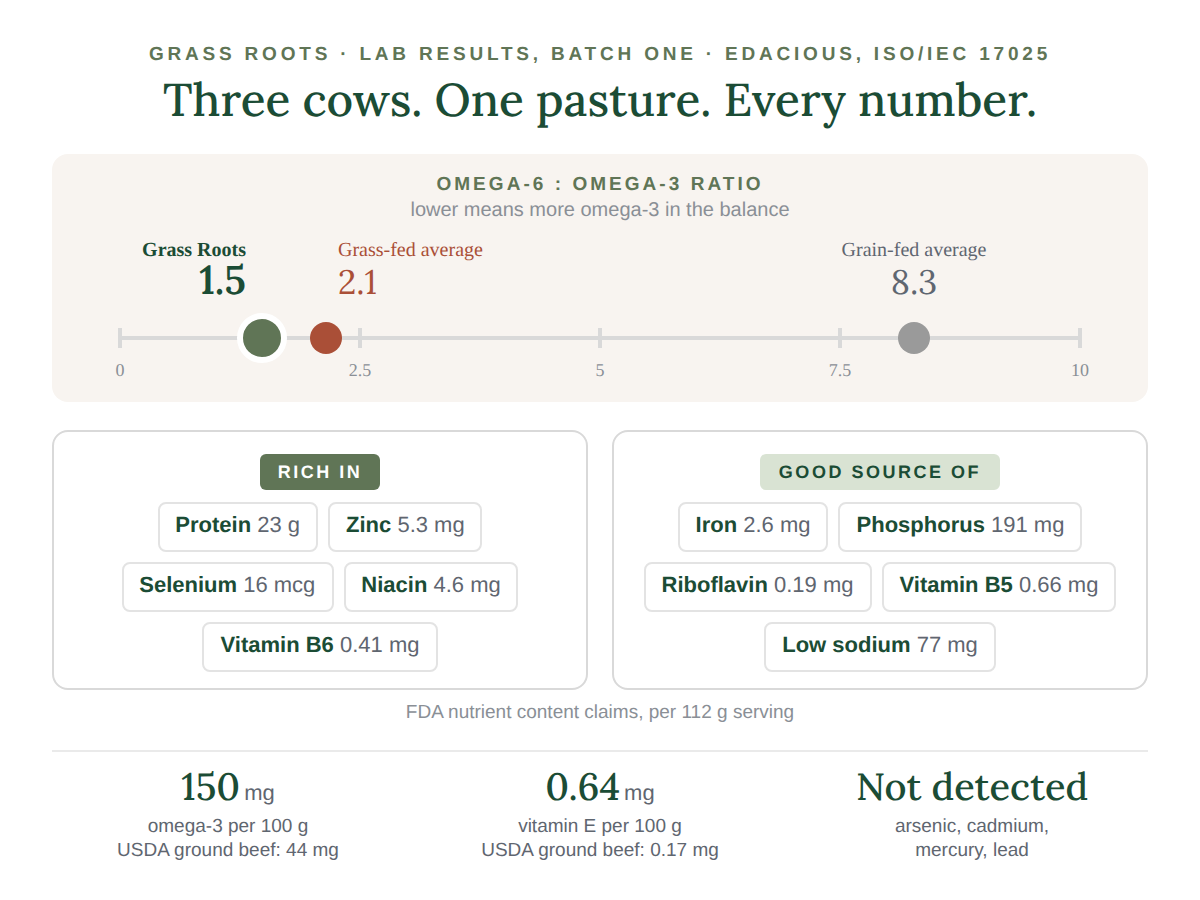
The results came back last week from Edacious, a nutrient density lab accredited to ISO 17025, the same standard forensic and drug-testing labs are held to. They ran more than a hundred measurements on each sample: fatty acids, vitamins, minerals, and heavy metals. The full report on each animal is here.
All three animals landed between 1.4 and 1.5 to 1 on that omega ratio. For context, the biggest study ever done on grass-fed beef looked at 337 steaks from 108 producers. Grass-fed averaged 2.1 to 1. Grain-fed averaged 8.3.
Vitamin E came in at almost four times the USDA number for ground beef. Vitamin A, more than double. Beta carotene showed up in the fat, which is the grass talking. It's why the fat is yellow. Saturated fat a third lower than USDA. Heavy metals: none detected.
Now, back to the question. Could the best beef in the world come from the cows nobody wants?
On the lab panel, the older animals look a lot like the young one. The ten-year-old came in 29% higher on iron and 13% higher on zinc than the youngest, and on everything else all three sat within a few percent of each other.
Tenderness, the thing everyone worries about with an older animal, we'd checked in April with a DNA test for the tender-beef genetics. Both older cows passed.
The flavor was a different story.
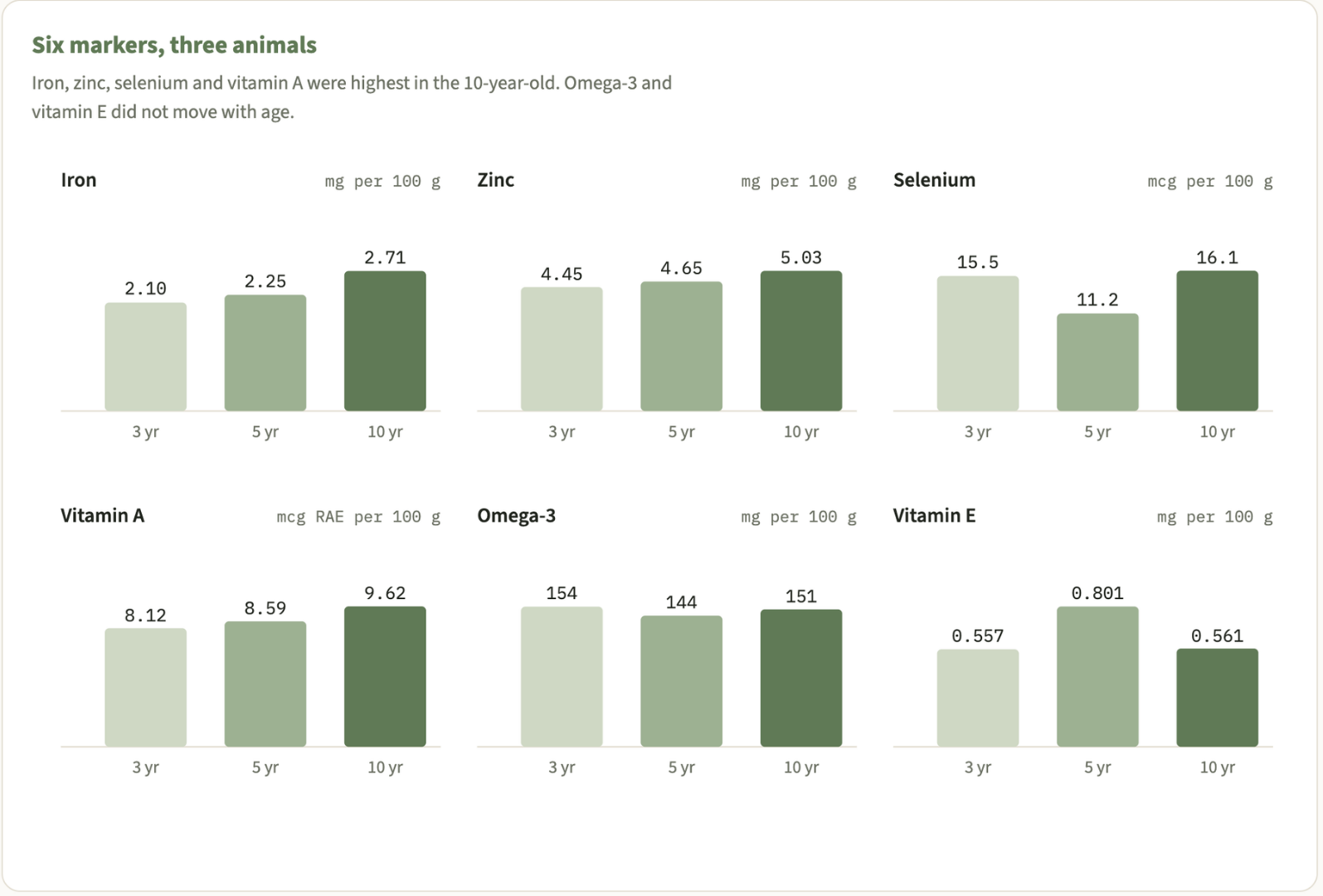
You can view the full report here.
I brought ribeyes from the five-year-old and the ten-year-old home to Arkansas and put them on the table for Andrea and a few friends who don't hand out compliments. The line that kept coming up was "one of the best I've ever had."
This is not mild beef. It's dark, the fat is yellow, the flavor is big, and it hangs around after the bite is gone. If you like a steak that tastes like something, this is your steak. If you want mild, it might not be.
The research says the difference is in the fat. France's national ag institute grilled nearly 500 steaks from grass-raised cattle and scored the oldest highest for flavor, with fat explaining more than half the difference. Our older two carried more fat than the youngest.
Other research points at the kind of fat, and ours moved the way it predicts.
Oleic acid, the soft fat in olive oil, went up. Palmitoleic acid, the one tasting panels link to buttery flavor, went up by half. Stearic acid, the hard fat that makes tallow waxy, dropped by nearly a third.
Soft fat over hard fat: 2 to 1 in the youngest animal, 3 to 1 in the ten-year-old.
Softer fat melts sooner and carries flavor longer. Some studies tie those shifts to flavor and some don't, but it's the pattern that fits what we tasted.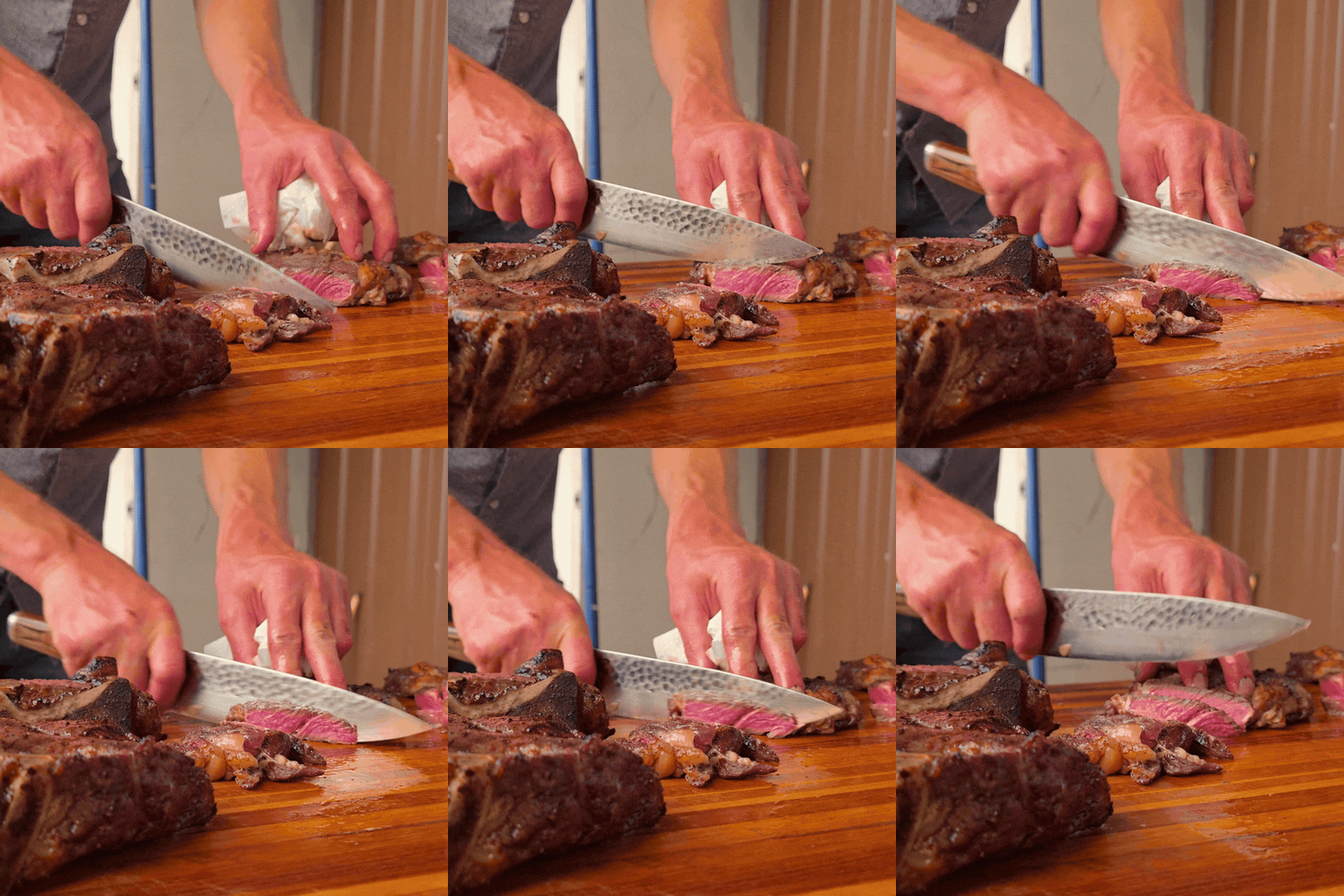 Here I am cutting into the grilled steaks for the hungry group.
I'll be honest, this is the part I could do all day. The physics teacher and the farmer in me working on the same problem: making the most delicious, nutrient-dense meat we can, and being able to prove it.
One more thing. We're putting together around twenty tasting boxes from these two animals. It's not beef you can just buy anywhere. If you'd like to try it, leave a comment and I'll send you the details soon.
Your farmer (and science nerd),
Cody
P.S. Next on my list: testing our pastured chicken and the feed it eats, and finding out whether forested pork really does make a difference. Have something in mind you'd like me to test? I'd love to hear it.
Leave a comment