


The Farm is the First Pharmacy

Last week I was on a stage in Montana, next to a wheat farmer named Bob Quinn, when he grinned and said the line I haven't stopped turning over since:
"Farmers should get paid like pharmacists."
Half the room laughed.
Bob wasn't joking. To him, food as medicine isn't a wellness slogan, it's a literal claim, and he's one of the few farmers alive who can prove it. He grows an older variety of wheat, closer to what wheat used to be, and he paid out of his own pocket for the clinical trials to test it. Real journals, real results. More selenium, more antioxidants, measurably lower inflammation in the people who ate it. And inflammation sits under nearly every chronic disease we've got.
Here's the part that still gets me: I'd tasted Bob's claim years before I could've explained it.
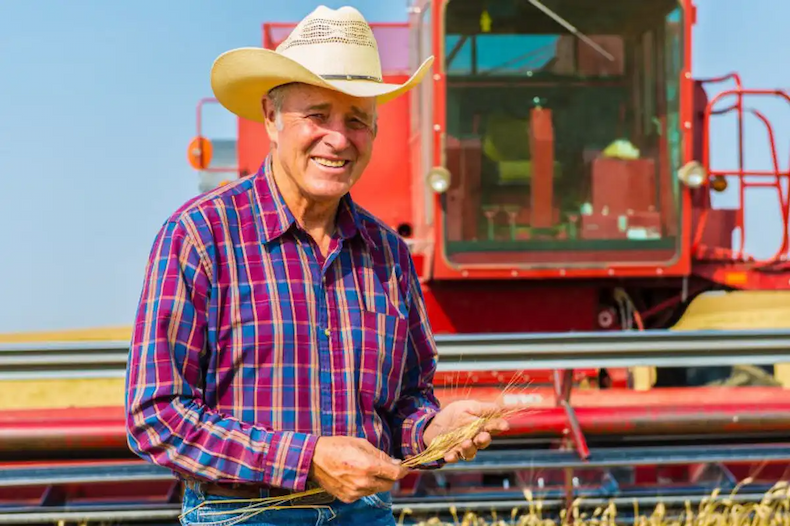
Fourth-generation farmer Bob Quinn researches regenerative farming and nutrient-rich food.
Before the farm, I baked sourdough bread for two years at a little bakery in Leslie, Arkansas called Serenity Farm Bread. We sourced our wheat from a regional organic grower, and that bread was different. Better. I chalked it up to the long ferment, the care, the 1 a.m. starts. I didn't yet know the most important thing about those loaves had been settled long before the wheat ever reached me.
It was the soil.
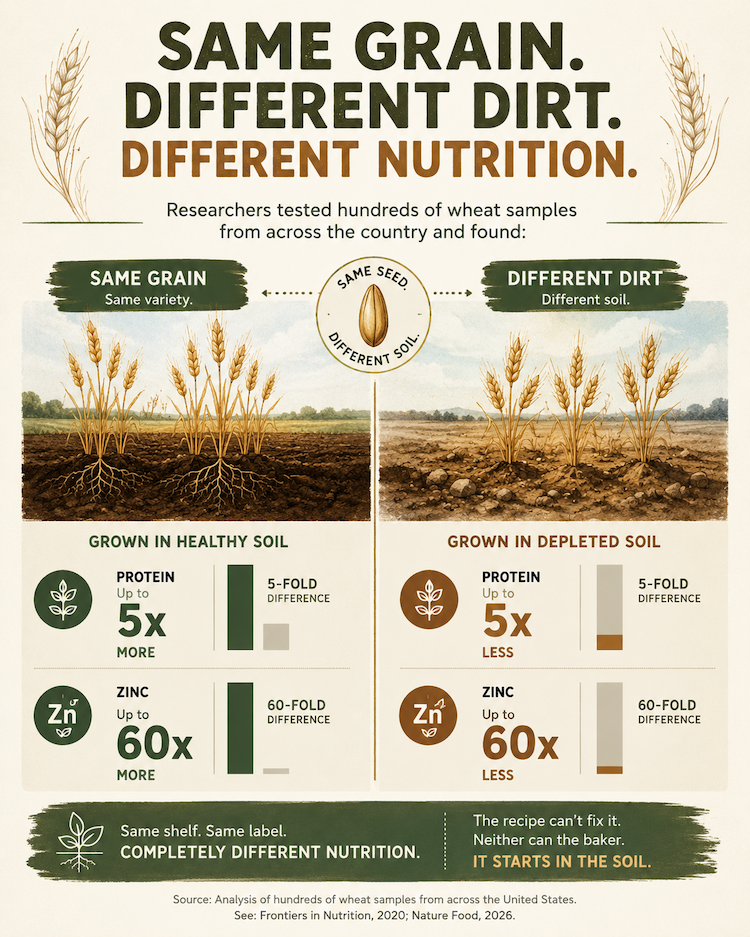
Same grain, different dirt, and you get different food. When researchers tested hundreds of wheat samples from across the country, the protein varied five-fold and the zinc by more than sixty. Same label, same shelf, completely different nutrition. The recipe couldn't fix that. Neither could the baker.
And this is where Bob's line stops being funny. Three in four American adults now live with a chronic condition, and more than half carry two or more. We've quietly accepted food's failure as a medical condition. We now spend more than $177 billion a year on supplements worldwide, and the 59 million Americans who take them regularly spend about $510 a head, buying back in a bottle what the food was supposed to carry in the first place.
That's not an accident. We bred the nutrition out of our grain chasing yield, milled out what survived chasing shelf life, and built a business model on the wreckage: sell the food hollow, sell the missing nutrients back in a bottle, then sell the drugs for the diseases that follow. Collect at every step.
So Bob's right. We're already paying pharmacy prices for our health. We just don't pay them to the farmer. The money goes to the supplement aisle and Big Pharma, never to the people who could've kept us off both.
So here's the question I keep turning over, and I'll leave it with you. What would have to be true for you to pay a farmer like a pharmacist? What would you need to know about how your food was grown, about the soil it came from, to decide it was worth it?
Because you're already paying either way. The only choice left is whether you pay for the food, or for the pills that chase it.
Your Farmer,
Cody
Leave a comment